

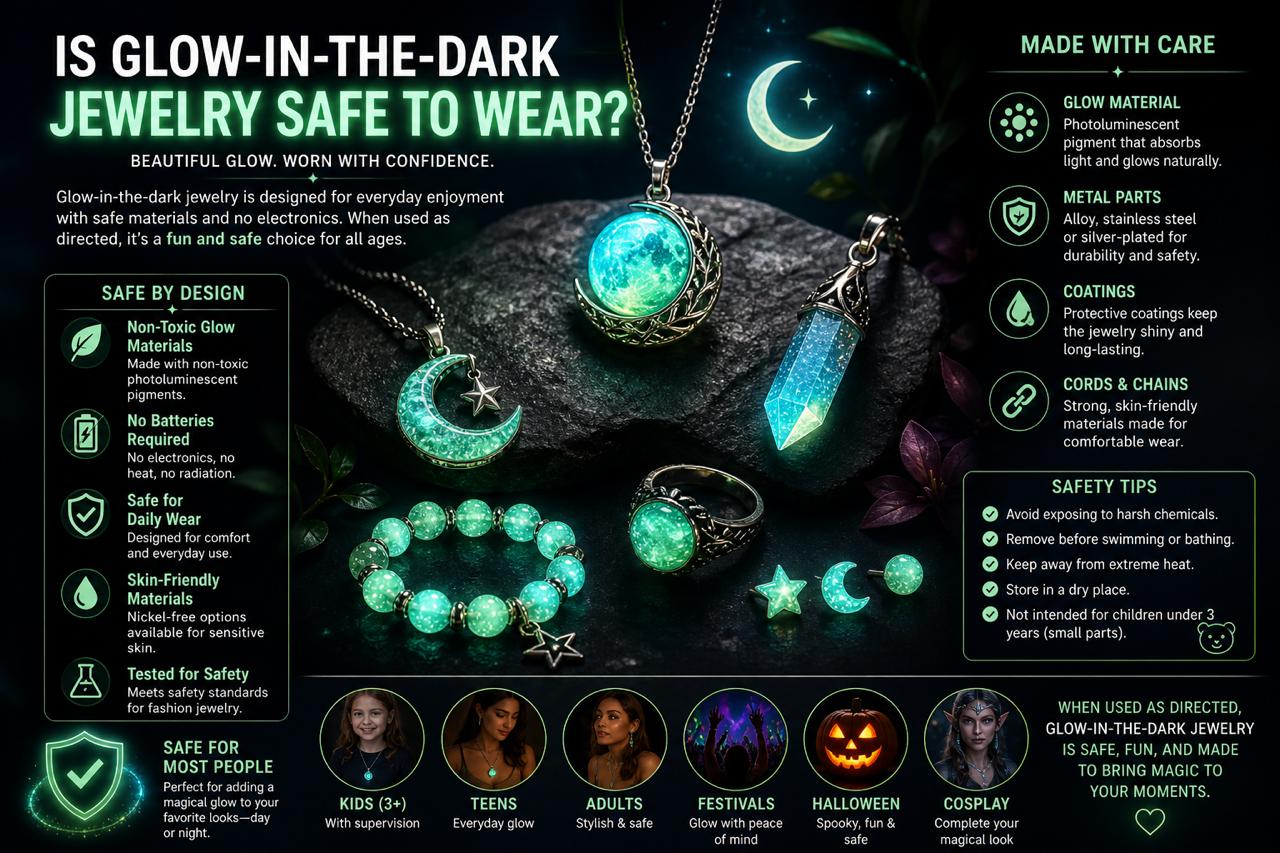
Glow-in-the-dark jewelry looks mysterious, fun, and almost magical. A necklace, bracelet, ring, earrings, or pendant can look beautiful in daylight and then begin to shine when the lights go down. But many people have one important question before wearing it:
Is glow-in-the-dark jewelry safe?
In most cases, modern glow-in-the-dark jewelry is safe to wear when it is made properly and used as intended. The glow effect itself is usually created by non-radioactive luminous materials that absorb light and release it slowly in the dark. Modern glow-in-the-dark paint and materials are different from old radium-based luminous products used in the early 1900s; the U.S. EPA notes that glow-in-the-dark paint today is made without radioactive material.
Still, like any jewelry, safety depends on the materials, design, age of the wearer, and how the piece is used. This guide explains what to know before wearing glow jewelry and how to enjoy it safely.
What Makes Glow-in-the-Dark Jewelry Glow?
Glow-in-the-dark jewelry usually contains luminous material that absorbs light and then releases it in darkness. This process is called photoluminescence.
In simple words:
Light charges the jewelry → the material stores energy → the jewelry glows in the dark
Most glow-in-the-dark jewelry can be charged with:
- Sunlight
- UV light
- Bright indoor light
- A lamp
- A phone flashlight for a quick boost
The jewelry does not usually need batteries, wires, or electricity. It simply needs exposure to light before it can glow.
Is Glow-in-the-Dark Jewelry Radioactive?
Modern glow-in-the-dark jewelry is generally not radioactive.
This is one of the biggest concerns people have because older luminous products, especially some antique watch dials and instruments, once used radium-based paint. Those antique items are very different from modern glow jewelry. The EPA explains that radium was used in some early glow paints, while modern glow-in-the-dark paint is now made without radioactive material.
So, if you are buying modern luminous jewelry from a regular jewelry or accessory shop, the glow effect is typically based on light-absorbing pigments rather than radiation.
The Short Answer: Is Glow-in-the-Dark Jewelry Safe?
Yes, glow-in-the-dark jewelry is generally safe to wear when:
- It is made with modern non-radioactive glow materials.
- It is worn as jewelry, not chewed or swallowed.
- It does not contain unsafe metals.
- It does not irritate your skin.
- It is age-appropriate.
- Small parts are kept away from young children.
- Battery-powered accessories are handled carefully.
The glow effect itself is usually not the main safety issue. The more important things to check are the same things you would check with regular jewelry: metal type, skin sensitivity, small parts, sharp edges, cords, and product quality.
What Safety Factors Should You Check?
Glow-in-the-dark jewelry can be safe and comfortable, but it is smart to look at a few details before wearing it.
1. Skin Sensitivity
Some people react to certain jewelry metals. The most common issue is not the glow material — it is often the metal used in chains, hooks, clasps, rings, or earring posts.
Nickel is one of the most common causes of allergic contact dermatitis, and jewelry can be a trigger for people with nickel sensitivity. The American Academy of Dermatology notes that nickel allergy can cause skin irritation or rash after contact with nickel-containing items.
If you have sensitive skin, look for jewelry described as:
- Nickel-free
- Hypoallergenic
- Stainless steel
- Titanium
- Sterling silver
- Gold-plated or gold-filled, depending on your sensitivity
If a necklace, bracelet, or pair of earrings causes itching, redness, burning, swelling, or rash, remove it and avoid wearing it again until you know what caused the reaction.
2. Small Parts
Some glow-in-the-dark jewelry includes small beads, charms, pendants, clasps, or decorative parts. These can be dangerous for babies and young children if they break off or are swallowed.
The U.S. Consumer Product Safety Commission says small parts in products for children under 3 can create choking, aspiration, or ingestion hazards.
For children, choose age-appropriate accessories and supervise use. Glow jewelry should not be used as a toy for babies or toddlers.
3. Lead and Cadmium in Low-Quality Jewelry
The glow effect is not the only thing that matters. Some low-quality jewelry can contain unsafe levels of metals such as lead or cadmium, especially in children’s jewelry.
Health Canada warns that children who swallow jewelry containing lead or cadmium can face serious and potentially life-threatening health effects. Canada’s Children’s Jewellery Regulations set limits for lead and cadmium content in children’s jewelry.
This is why it is important to buy jewelry from shops that provide clear product information and avoid random, poorly described accessories when shopping for children.
4. Battery-Powered Accessories
Classic glow-in-the-dark jewelry usually does not need batteries. But some light-up accessories use LED lights, coin batteries, or button batteries.
If a piece contains a battery, be extra careful around children. The CPSC warns that button or coin batteries can cause severe injury if swallowed and can burn through a child’s throat or esophagus in as little as two hours.
If you want simple luminous jewelry with less maintenance, traditional glow-in-the-dark pieces are usually easier than battery-powered LED accessories.
5. Broken or Damaged Jewelry
Do not wear glow jewelry if it is cracked, leaking, broken, sharp, or damaged. Even if the glow material itself is not dangerous under normal use, damaged jewelry can scratch skin, expose unknown materials, or create small loose parts.
Is Glow-in-the-Dark Jewelry Safe for Sensitive Skin?
Glow-in-the-dark jewelry can be safe for sensitive skin, but it depends on the full product — not only the glowing part.
The most common skin concerns are:
- Nickel allergy
- Metal sensitivity
- Irritation from cheap coatings
- Friction from tight bracelets or necklaces
- Reactions to adhesives, paints, or finishes
DermNet notes that allergic contact dermatitis from metal jewelry is often linked to nickel or cobalt allergy, and once it develops, it can last for many years.
If your skin is sensitive, choose lightweight pieces and avoid wearing them for long periods the first time. Try a short test wear before using new jewelry at a festival, concert, Halloween party, or all-night event.
Is Glow-in-the-Dark Jewelry Safe for Kids?
Glow-in-the-dark jewelry can be fun for older children, teens, and adults, but it should be chosen carefully for kids.
For young children, the main risks are:
- Choking on small parts
- Swallowing charms or beads
- Pulling on necklaces or cords
- Chewing the jewelry
- Exposure to unsafe metals in low-quality items
- Button batteries in LED accessories
For kids, choose jewelry that is age-appropriate, durable, and free from loose small parts. Children should not sleep with necklaces, put jewelry in their mouth, or wear pieces that are too tight.
Glow-in-the-dark jewelry is best treated as an accessory, not a toy.
Is Glow-in-the-Dark Jewelry Safe for Everyday Wear?
Yes, many glow-in-the-dark jewelry pieces can be worn as everyday accessories. A glow necklace, bracelet, pendant, or earrings can look stylish during the day and reveal a luminous effect at night.
For everyday wear, choose pieces that are:
- Comfortable
- Lightweight
- Smooth on the skin
- Easy to remove
- Made with skin-friendly materials
- Suitable for your daily activities
Avoid wearing glow jewelry in the shower, pool, ocean, or gym unless the product clearly says it is water-resistant. Moisture, sweat, and chemicals can affect jewelry finishes over time.
Is Glow-in-the-Dark Jewelry Safe for Festivals and Raves?
Glow-in-the-dark jewelry is a great choice for festivals, raves, concerts, and glow parties because it is usually lightweight and does not require batteries.
It can help your outfit stand out in dark spaces while still feeling comfortable. A luminous necklace or bracelet can be easier to wear for long events than heavy LED accessories.
For festivals, choose:
- Lightweight necklaces
- Comfortable bracelets
- Earrings that will not pull
- Secure clasps
- Accessories that will not snag on clothing
- Pieces that can be recharged with sunlight or UV light
Internal link suggestion: Add a link to your glow necklaces, glow bracelets, or festival jewelry collection here.
Is Glow-in-the-Dark Jewelry Safe for Halloween and Cosplay?
Yes, glow-in-the-dark jewelry can be safe for Halloween and cosplay when worn properly. It is especially useful for fantasy, witchy, celestial, gothic, fairy, vampire, ghost, and sci-fi looks.
For costumes, avoid jewelry that blocks vision, catches on fabric, or has sharp edges. If you are wearing a glow mask or large accessory, make sure it fits securely and does not make breathing, movement, or visibility difficult.
Internal link suggestion: Add a link to your Halloween accessories, glow masks, or cosplay accessories category here.
Can You Sleep in Glow-in-the-Dark Jewelry?
It is better not to sleep in glow-in-the-dark jewelry.
This is not because of the glow effect. It is because jewelry can:
- Tangle in hair
- Catch on bedding
- Put pressure on skin
- Break during sleep
- Damage chains or clasps
- Create discomfort
- Become unsafe for children
Remove necklaces, bracelets, earrings, and rings before sleeping to keep both your jewelry and your skin in better condition.
Can You Shower With Glow-in-the-Dark Jewelry?
In most cases, you should avoid showering with glow-in-the-dark jewelry unless the product description says it is water-resistant.
Water, soap, shampoo, chlorine, saltwater, and body products can affect:
- Metal finishes
- Chains
- Clasps
- Coatings
- Adhesives
- Glow surfaces
- Decorative elements
To help your luminous jewelry last longer, remove it before showering, swimming, or applying perfume and lotions.
How to Wear Glow-in-the-Dark Jewelry Safely
Here are simple safety tips for wearing luminous jewelry:
Choose the Right Size
Necklaces, bracelets, and rings should fit comfortably. Avoid anything too tight, especially for children.
Check the Materials
If you have sensitive skin, check whether the product is nickel-free or hypoallergenic.
Inspect Before Wearing
Look for cracks, loose parts, sharp edges, or broken clasps before putting jewelry on.
Keep It Away From Your Mouth
Do not chew, lick, or swallow glow jewelry. It is made to be worn, not eaten.
Supervise Children
Keep small jewelry parts away from babies and toddlers. Older children should use glow jewelry only with proper guidance.
Avoid Water and Harsh Chemicals
Remove jewelry before showering, swimming, cleaning, or applying perfume.
Store It Properly
Keep glow jewelry in a dry pouch, box, or separate compartment to avoid scratches and damage.
Recharge It With Light
Use sunlight, UV light, or a bright lamp to recharge the glow before wearing it at night.
Glow-in-the-Dark Jewelry vs LED Jewelry: Which Is Safer?
Both can be safe when made properly, but they have different safety considerations.
Glow-in-the-Dark Jewelry
Glow-in-the-dark jewelry usually uses light-absorbing materials and does not require batteries. It is simple, lightweight, and easy to maintain.
Best for:
- Everyday wear
- Festivals
- Halloween
- Cosplay
- Camping
- Glow parties
- Unique gifts
LED Jewelry
LED jewelry uses electronic lights and often contains batteries. It can be brighter, but it needs more care. Battery compartments should be secure, especially around children.
Best for:
- Stage outfits
- Bright party looks
- Flashing effects
- High-energy events
For most beginners, glow-in-the-dark jewelry is the simpler option because it does not usually involve electronics or batteries.
Signs You Should Stop Wearing a Jewelry Piece
Remove your glow-in-the-dark jewelry if you notice:
- Itching
- Redness
- Rash
- Burning
- Swelling
- Pain
- Blisters
- Skin peeling
- A broken clasp
- Sharp or cracked parts
- Loose beads or charms
If skin irritation does not improve after removing the jewelry, or if the reaction is severe, seek medical advice.
How to Choose Safe Glow-in-the-Dark Jewelry
When shopping for luminous jewelry, look for pieces that are clearly described and suitable for your use.
For Adults
Choose based on comfort, design, material, and occasion. A glow necklace, bracelet, or earrings can be a simple way to add a luminous detail to your outfit.
For Sensitive Skin
Look for hypoallergenic or nickel-free options. Avoid unknown metals if you already react to jewelry.
For Kids
Choose age-appropriate pieces with no loose small parts. Avoid battery-powered items for young children unless the battery compartment is secure and the product is designed for that age group.
For Parties and Festivals
Pick lightweight pieces that stay secure while dancing or moving.
For Gifts
Glow-in-the-dark jewelry makes a memorable gift, but check whether the person has metal allergies or prefers certain types of jewelry.
Final Thoughts
Glow-in-the-dark jewelry is generally safe to wear when it is made with modern non-radioactive glow materials and used properly. The glow effect itself is not usually the main concern. What matters most is the quality of the jewelry, the materials touching your skin, the size of the parts, and whether the piece is appropriate for the person wearing it.
For adults and teens, glow jewelry can be a fun and stylish choice for festivals, raves, Halloween, cosplay, concerts, camping nights, and everyday outfits. For children, it should be chosen carefully and used with supervision.
The safest approach is simple: choose quality pieces, check the materials, avoid chewing or swallowing jewelry, keep small parts away from young children, and remove any accessory that causes irritation.
With the right care, glow-in-the-dark jewelry can be a safe, beautiful, and unforgettable way to light up your style.
FAQ: Is Glow-in-the-Dark Jewelry Safe?
Is glow-in-the-dark jewelry safe to wear?
Yes, modern glow-in-the-dark jewelry is generally safe to wear when it is made properly and used as intended. It should not be chewed, swallowed, or worn if it causes skin irritation.
Is glow-in-the-dark jewelry radioactive?
Modern glow-in-the-dark jewelry is generally not radioactive. Today’s glow materials are different from old radium-based luminous paints used in some antique items.
Can glow-in-the-dark jewelry irritate skin?
Yes, any jewelry can irritate sensitive skin depending on the metals, coatings, or materials used. Nickel is a common jewelry-related allergen.
Is glow-in-the-dark jewelry safe for children?
It depends on the design and age of the child. Avoid small parts for young children, supervise use, and do not let children chew or sleep in jewelry.
Can I wear glow-in-the-dark jewelry every day?
Yes, many glow necklaces, bracelets, and earrings can be worn daily. Remove them before showering, swimming, sleeping, or applying perfume.
Is glow-in-the-dark jewelry safer than LED jewelry?
Glow-in-the-dark jewelry is often simpler because it usually does not need batteries. LED jewelry can also be safe, but battery compartments must be secure, especially around children.
What should I do if glow jewelry causes a rash?
Remove the jewelry immediately. Wash the skin gently and avoid wearing that piece again. If the rash is severe or does not improve, seek medical advice.
Can glow-in-the-dark jewelry be washed?
It is better to wipe it gently with a soft dry or slightly damp cloth. Avoid soaking it unless the product specifically says it is water-resistant.
Suggested Internal Links
- Glow-in-the-dark necklaces
- Glow-in-the-dark bracelets
- Glow-in-the-dark earrings
- Glow masks
- Glow accessories
- Festival jewelry
- Halloween accessories
- Gift ideas
 Previous Post
 Next Post